
nginx and HTTP/2: two flaws allow code execution without login
CVE-2026-123007 and CVE-2026-123633 in the nginx HTTP/2 module allow unauthenticated code execution. Who is affected and what helps until you can patch.
- by blacklens.io Team
- Published
- 7 min read
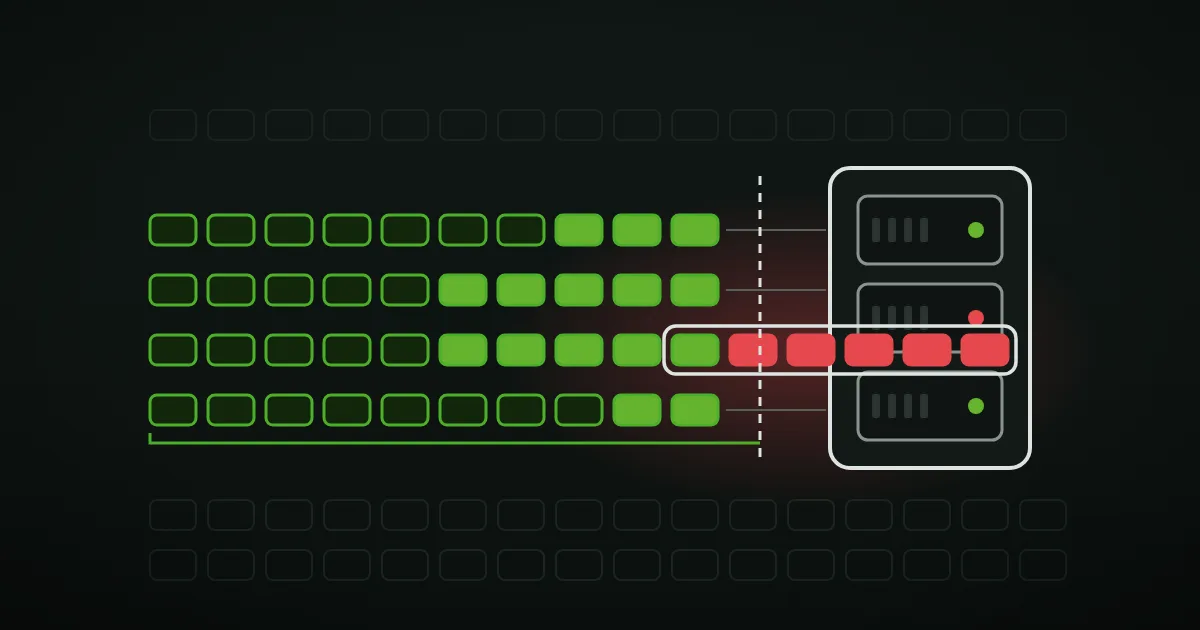
Since 18 November 2026, nginx 1.30.7 and 1.31.9 are available, and with them fixes for two flaws that let attackers run code on an nginx server without logging in. The older one has been in every nginx version that speaks HTTP/2 since 2015; the only precondition is that HTTP/2 is switched on. A proof of concept went public on the day of disclosure. According to Rapid7, an attack with it does, however, need around 128 gigabytes of traffic in under an hour.
What are CVE-2026-123007 and CVE-2026-123633?
CVE-2026-123007 and CVE-2026-123633 are two memory-safety flaws in the nginx HTTP/2 module ngx_http_v2_module, fixed on 18 November 2026 in nginx 1.30.7 (stable) and 1.31.9 (mainline) and in NGINX Plus 37.0.8.1 and 37.3.0.1. F5, which makes nginx and issued the CVE records, rates both at CVSS 9.2 under version 4.0 and 8.1 under version 3.1. The nginx project rates CVE-2026-123007 as "major" on its security page, and CVE-2026-123633 only as "medium".
Several teams found the bugs independently; the CVE records credit Wiz Research, Rapid7, Xint, Metnir and Ikotas Labs. Wiz, Rapid7 and Xint published their own analyses the same day. Xint groups the two flaws with three other nginx bugs and a Linux kernel bug under the name "nginx2root". The same release fixes ten CVEs, including use-after-free bugs in HTTP/3, the DNS resolver and the mail proxy. That brings nginx.org to 36 flaws with a 2026 CVE number, against two from 2025. According to Xint, a fully automated scan found four of its five nginx flaws, the pattern described in our post on Claude Mythos.
Two bugs, two sets of conditions
Both flaws require HTTP/2 to be enabled. In nginx that is not a default but a line in the configuration. Beyond that, they differ considerably:
| CVE-2026-123007 | CVE-2026-123633 | |
|---|---|---|
| Bug | Flow-control calculation error | Use-after-free |
| Since | 1.9.5 (2015) | 1.19.7 (2021) |
| Also required | – | Proxying to a backend, scarce connections |
| Public exploit | yes (Rapid7) | no |
CVE-2026-123007 sits in HTTP/2 flow control. A client uses WINDOW_UPDATE frames to tell the server how much data it can accept, and nginx keeps a send window per connection that the standard caps at 2³¹−1 bytes. When the client cancels a stream, nginx credits the unsent data back to the window without checking that cap. The next check then miscalculates: nginx takes on a negative length and, when sending over TLS, copies far past the end of a buffer. According to Wiz, a server delivering ordinary static files is enough, with no backend and no extra module. Version 1.9.5 is the release in which nginx introduced HTTP/2.
CVE-2026-123633 concerns connection management. An HTTP/2 connection without active streams sits on a list of reusable connections, which nginx closes when free worker_connections run low. If an attacker sends only half of a header frame, the connection stays on that list even though a request is being built on it. When nginx then opens a connection to the backend for that request and frees slots in the process, it releases the memory of its own connection and carries on using it. That is a use-after-free: access to memory that has already been released. An attacker does not have to wait for slots to run low. According to Xint, its exploit creates that pressure itself with additional connections.
How realistic an attack is
Code execution has been demonstrated in the lab for both flaws; as of 18 November, no attacks in the wild are known. Wiz, Rapid7 and Xint each built their own exploits, and Xint says it tested its exploit against servers on AWS, Google Cloud and Azure. Only Rapid7 has published a proof of concept, for CVE-2026-123007, on GitHub on 18 November. In the CVE record, CISA rates exploitation of that flaw as "none", and neither flaw is in the KEV catalogue.
The effort is high. F5 describes a crash of the worker process as the typical outcome; an attacker could execute code if ASLR is disabled or bypassed. That is exactly what the three teams did. Wiz still calls the flaws hard to exploit remotely, because an attacker has to leak memory addresses, shape the heap precisely and cope with different builds and configurations. Rapid7 needs around 128 gigabytes of HTTP/2 data for code execution. At 10 Gbit/s that takes about two minutes, at 1 Gbit/s 17 minutes. Below roughly 300 Mbit/s the attack fails, because nginx closes a connection after one hour by default. Rapid7's exploit also depends on a specific memcpy variant in glibc on x86-64; according to Rapid7, no other routes are currently known.
From worker process to root
Injected code runs with the rights of the nginx worker process, usually an unprivileged user such as www-data. That is enough to read the traffic this worker handles and to reach systems the server can see on the internal network.
Xint goes one step further. Combined with a still unpatched bug in the SCTP code of the Linux kernel, the team says it gained root on the host, including from inside a Docker container. The kernel bug has no CVE number and no patch yet. Xint is withholding the details until then and recommends blocking the sctp kernel module wherever SCTP is not needed. A container is therefore not a boundary to rely on with these flaws.
Where the fix has not arrived yet
The update on nginx.org does not reach many servers directly, because they get nginx from package repositories, container images or third-party products. Those follow their own schedules and their own version numbers:
- Distributions: Debian 13 ships nginx 1.26.3, Debian 12 nginx 1.22.1 and Ubuntu 24.04 nginx 1.24.0, all in the affected range. Fixes arrive there as backports under the old version number. In the late afternoon of 18 November, the Debian and Ubuntu security trackers did not yet list the two CVEs.
- Container images: The official nginx image on Docker Hub was still on 1.31.8 at around 17:00 CET on 18 November. Images built on it need a rebuild once it is updated.
- Kubernetes: The ingress-nginx controller has been archived since March 2026. Its last release,
controller-v1.15.1, is built on nginx 1.27.1 and enables HTTP/2 by default (optionuse-http2, defaulttrue). No fix will come from the project. That is one more reason for the migration our post on the CORS flaw in Azure's ingress already recommended. - NGINX Plus and forks: F5 names fixed versions only for NGINX Plus 37. The CVE record lists the R releases from R33 onwards as affected, with no fixed version; older ones were not evaluated by F5. The fork Angie did not yet list the two CVEs in its security advisories on 18 November. For forks and appliances, the respective vendor's notice is what counts.
Version numbers mislead in both directions. A patched Debian package still reports 1.26.3, and a server with server_tokens off does not reveal its version at all.
What to do now
The update comes first; disabling HTTP/2 bridges the time until it is installed:
- Update: nginx 1.30.7 or 1.31.9, NGINX Plus 37.0.8.1 or 37.3.0.1, and for distributions the package's security update as soon as it is out. Then restart the service;
nginx -s reloadonly reloads the configuration, not the new binary. - Disable HTTP/2 where the update has to wait: from nginx 1.25.1, set
http2 off;in every affectedserverblock and remove thehttp2parameter from alllistendirectives; in older versions, only the latter. Then reload and check that the old workers have exited. Check services that require HTTP/2, such as gRPC, beforehand. - Find where HTTP/2 is active:
nginx -T | grep -n http2shows the places in the configuration. From the outside,curl -sI --http2 https://beispiel-gmbh.at -o /dev/null -w '%{http_version}\n'prints2if the server negotiates HTTP/2. - Do not forget the rest of the release: disabling HTTP/2 only protects against these two flaws. The other eight CVEs concern HTTP/3, the resolver, the mail proxy and other modules; only the update helps there.
- Harden the kernel: where SCTP is not needed, block the module with
install sctp /bin/falsein a file under/etc/modprobe.d/, as Xint recommends. This only prevents loading viamodprobe. - Watch for signs: crashed workers in the error log (
exited on signal 11), long-lived HTTP/2 connections with very large data volumes, commands launched by an nginx worker. Wiz calls these general warning signs, not confirmed indicators.
What helps – and why visibility decides
On the day of an nginx update, the first question is not how to update but where nginx is running at all: as a web server, as a reverse proxy in front of applications, as ingress in a cluster, embedded in appliances. Through Attack Surface Management, blacklens.io continuously discovers from the outside which services, web applications and technologies are reachable; internal systems are covered by the Sentry Agent. The Threat Center matches new CVEs such as CVE-2026-123007 against that inventory and shows for each hit whether it rests on the exact version or only on the product. For an nginx with server_tokens off, it is the latter.
Two things the outside view does not show: whether a distribution package already contains the backport, and whether the conditions for CVE-2026-123633 are met. Whether HTTP/2 is active, the curl command above shows in seconds. What can be narrowed down from the outside is where the check on the system is needed first.
Frequently asked questions
- CVE-2026-123007 and CVE-2026-123633 are two memory-safety flaws in the nginx HTTP/2 module that let attackers execute code on the server without authentication. CVE-2026-123007 is a calculation error in HTTP/2 flow control and has been in the code since nginx 1.9.5 in 2015. CVE-2026-123633 is a use-after-free that can occur since nginx 1.19.7. F5 rates both at CVSS 9.2 under version 4.0. Both were fixed on 18 November 2026.
More articles
Java4Shell: the CPU decides whether Java is vulnerable
Java4Shell (CVE-2026-114938) hits OpenJDK 17.0.6 and later only on x86 servers with AVX-512 VBMI. Which JDKs have a fix, and what helps until then.
- 6 min read
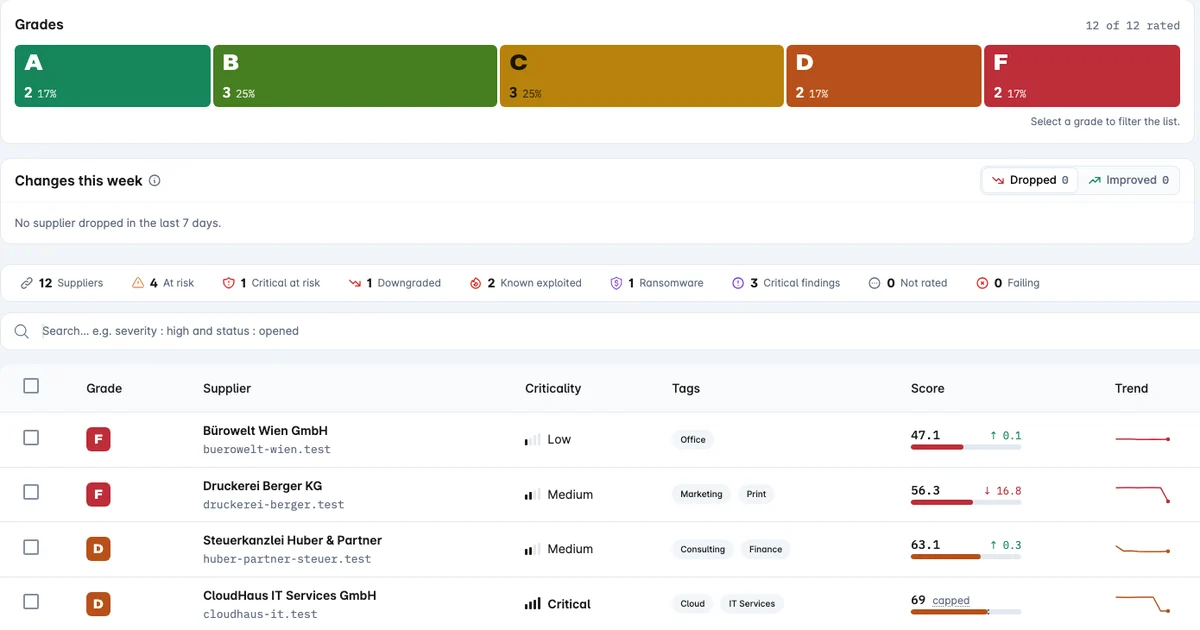
NIS2 supply chain: what happens between two questionnaires
Supply chain security under NIS2: what Austria's NISG 2026 and Germany's BSIG require, where questionnaires end and how to monitor suppliers continuously.
- 6 min read

HTTP2Shell: the Brotli flaw reaches far beyond Node.js
HTTP2Shell is not a new flaw but CVE-2026-111497 in any software with a Brotli decoder. Who is affected, and why the version number misleads.
- 5 min read
See your attack surface within 24 hours.
We set up your workspace and walk you through the first findings.
- 14 days free, all features
- No credit card required
- We walk you through your first findings