
Alert engine: more control, better prioritisation, a clear overview
The new blacklens.io alert engine prioritises alerts across their whole lifecycle and turns them into shared team work, alongside a redesigned dashboard.
- by blacklens.io Team
- Published
- Updated
- 3 min read
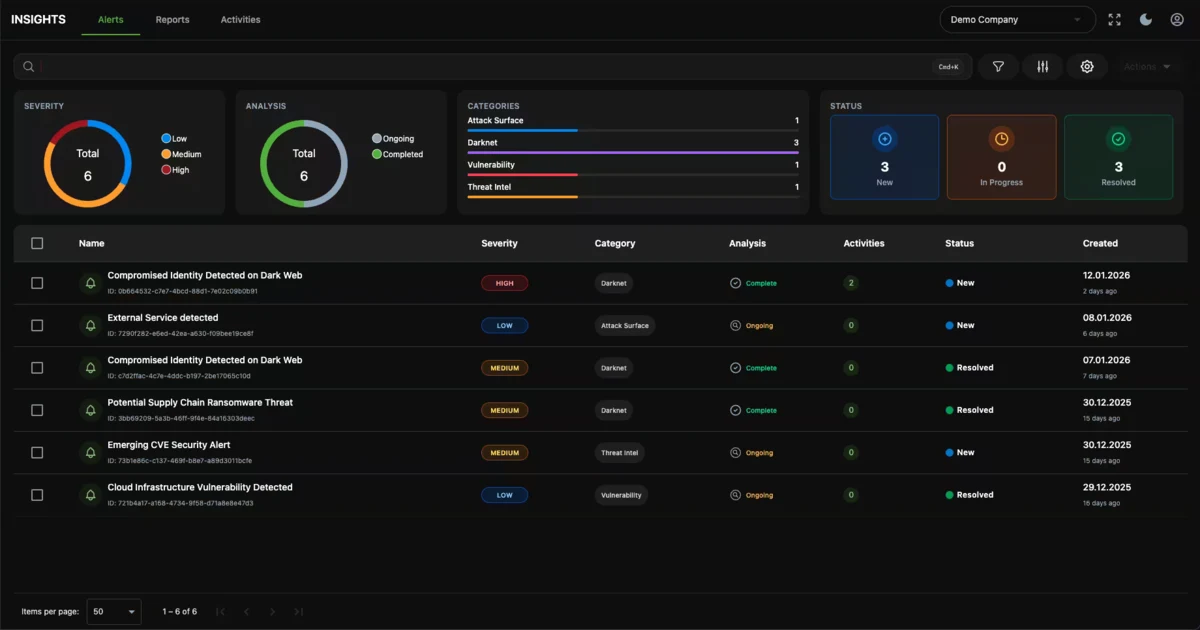
With its latest updates, blacklens.io puts a clear focus on operational efficiency in day-to-day security work. The new alert engine brings structure, prioritisation and teamwork to daily operations. A redesigned dashboard that concentrates on what matters completes the release.
Alert engine: alerts that matter
The threat landscape changes constantly. What counts is not creating more alerts but the right ones. That is exactly where the new alert engine comes in.
Every five minutes, the alert engine collects new alerts from every relevant module, from asset discovery and vulnerability management to dark web and threat intelligence sources. What is new is the dynamic rating across an alert's whole lifecycle:
- Severity escalates automatically on new information, for example when an exploit is available for a vulnerability and its EPSS score is above 0.80
- A clear split between ongoing analyses (Ongoing) and completed cases (Complete)
- Alerts expire automatically after 30 days
That keeps the focus on the risks with real impact.
Transparency and collaboration: alerts as shared work
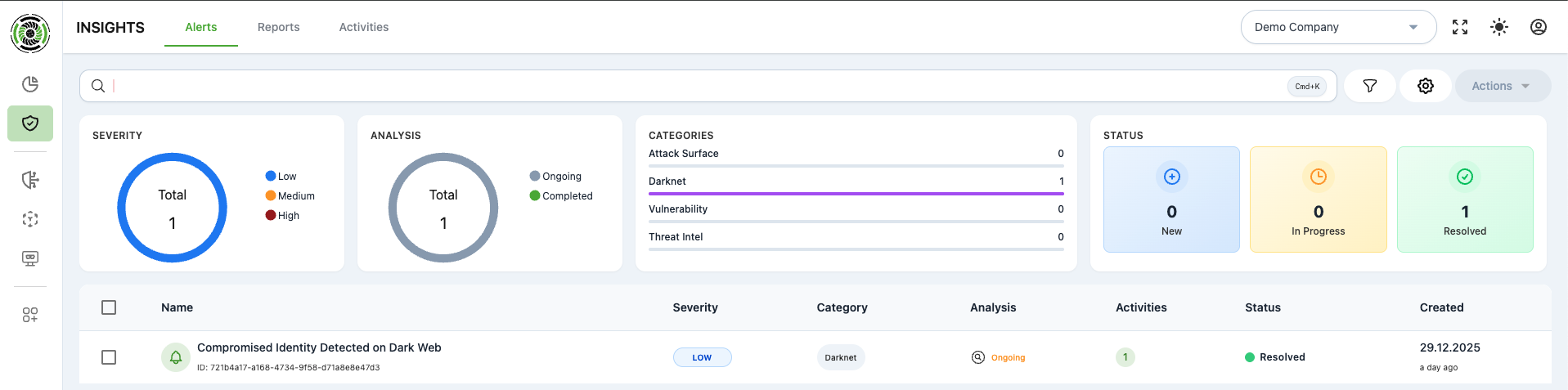
Security incidents are rarely handled in isolation. That is why alert management is built for teamwork. Every alert has a central detail view with:
- complete technical information and context data
- a chronological timeline of all relevant events and changes
- support for root cause analysis through traceable relationships
Collaboration features complete it:
- the statuses New, In Progress and Resolved that reflect where the work stands
- comments to document findings and measures
- transparent coordination between SOC, IT and management
Alerts thus turn from a simple notice into a shared piece of work.
Configurable alert routing: the right information at the right time
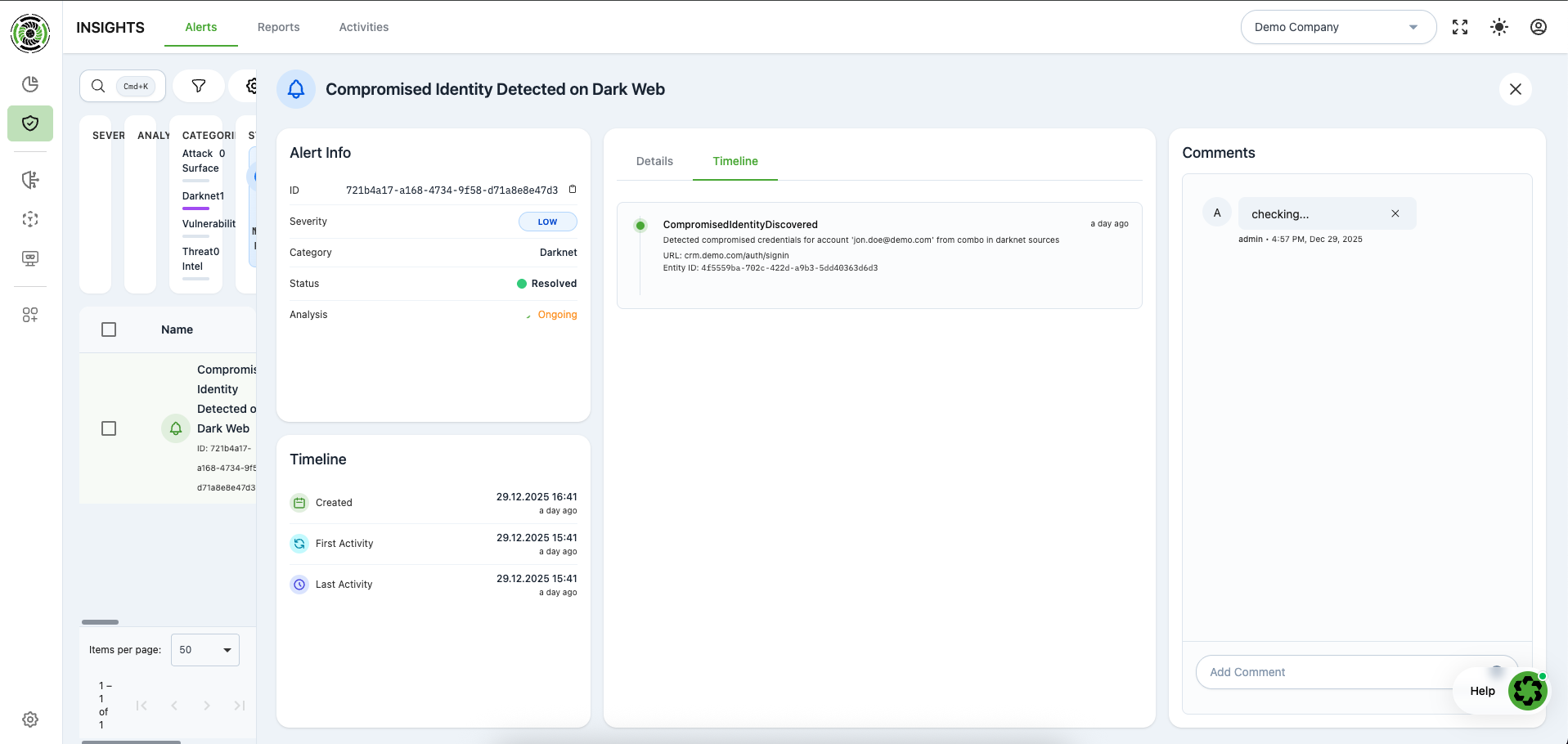
Not every team needs every piece of information. The new notification policies give you fine-grained control over alert routing:
- filters by severity and alert type
- recipients and workspace users per policy
Alerts go out by email and through Microsoft Teams, Jira, a generic webhook and other integrations. Relevant alerts arrive where they are actually handled.
New dashboard design: more clarity, a better user experience
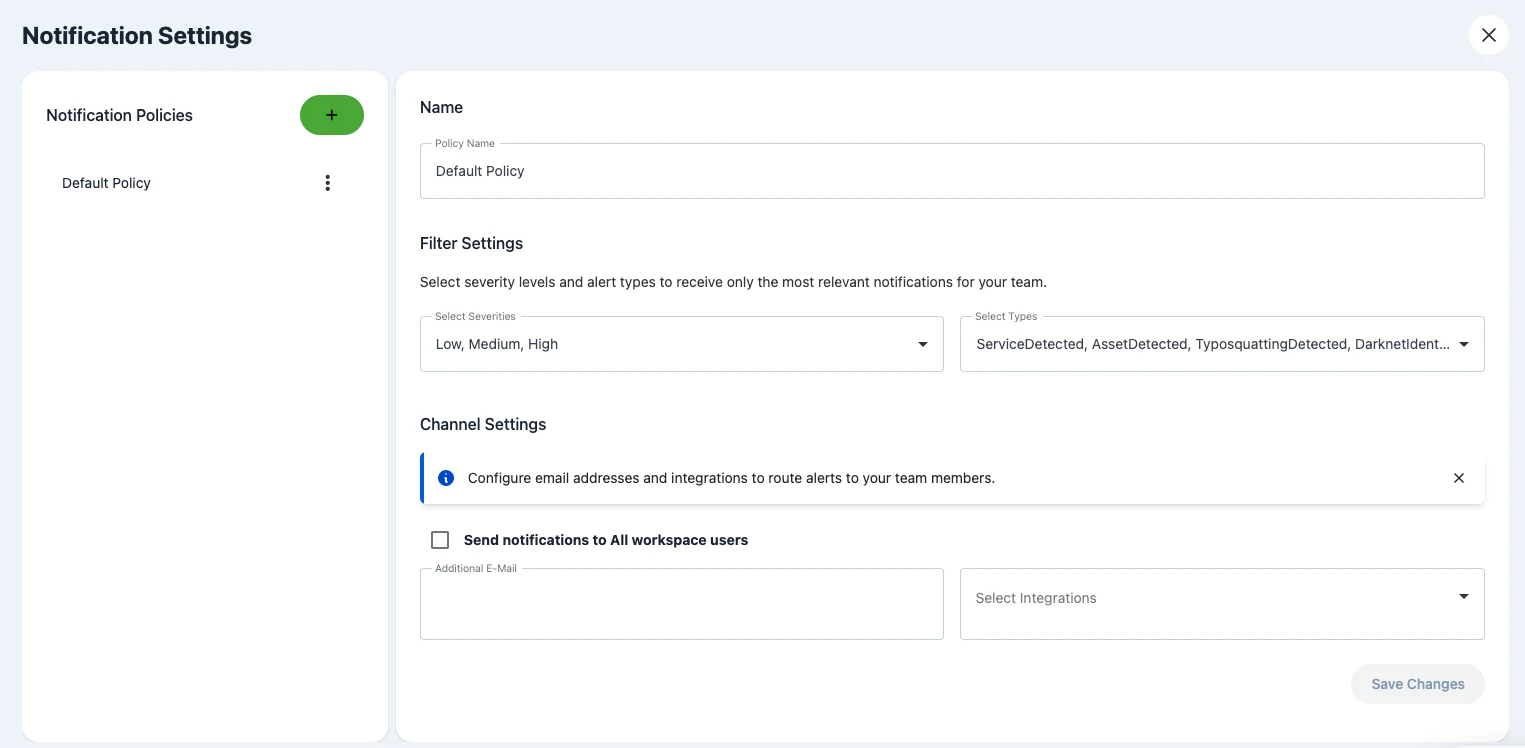
Alongside the new alert engine, the entire dashboard design has been reworked. The aim was to make more room for security-relevant information and to make finding your way around the portal easier:
- clearer structures and more logical information hierarchies
- more space for key insights and operational metrics
- less visual complexity with higher information density
The result supports quick decisions and makes daily work with complex security data simpler.
Conclusion
With the new alert engine and the redesigned dashboard, blacklens.io moves towards operational security intelligence. Less noise, more context, clear priorities and real teamwork – for everyone who wants to do more than monitor their attack surface and keep it actively under control.
Frequently asked questions
- The new blacklens.io alert engine collects alerts every five minutes from every relevant module, from asset discovery and vulnerability management to dark web and threat intelligence sources, and rates them across their whole lifecycle. Severity escalates automatically when new information arrives, ongoing analyses are kept apart from completed cases, and alerts expire automatically after 30 days.
More articles

HTTP2Shell: the Brotli flaw reaches far beyond Node.js
HTTP2Shell is not a new flaw but CVE-2026-111497 in any software with a Brotli decoder. Who is affected, and why the version number misleads.
- 5 min read

Node2Shell: why patching Node alone is not enough
Node2Shell exploits a flaw in the Brotli decoder that Node.js bundles. The fix ships in Node 22.23.4, 24.22.1 and 26.12.1 – and in Brotli itself.
- 5 min read
Fortinet hardening release: patching without an advisory
Fortinet shipped critical fixes for FortiOS, FortiManager and FortiAnalyzer on 22 October 2026. The advisories with CVE ids only follow on 10 November.
- 5 min read
See your attack surface within 24 hours.
We set up your workspace and walk you through the first findings.
- 14 days free, all features
- No credit card required
- We walk you through your first findings